




World's Fastest Online Shopping Destination

NGK spark plugs for motorcycles and scooters: reliable, precise and available in standard, platinum and iridium versions for safe ignition, better performance and long-lasting durability.
The spark plug is a key component of the engine: it generates the spark that ignites the air-fuel mixture inside the cylinder. A precise and consistent spark ensures quick starts, smooth operation and optimized fuel consumption.
The most common and affordable solution.
Excellent thermal conductivity, ideal as an OEM replacement for everyday scooters and motorcycles.
Require more frequent replacement compared to precious metal versions.
Longer life thanks to the platinum electrode.
Maintain the correct gap for longer, ensuring consistent ignition.
Great for those seeking a balance between performance and longevity.
Ultra-thin iridium central electrode for a more precise spark.
Maximum durability and improved throttle response.
Perfect for sports bikes or riders who want top performance and reduced maintenance.
The number in the NGK code indicates the plug’s heat range.
Lower numbers = hotter plug (retains heat).
Higher numbers = colder plug (dissipates heat faster).
Choosing the right heat range is crucial: a plug that’s too hot can cause overheating, while one that’s too cold may lead to fouling.
The letter “R” in the code identifies resistor spark plugs, which reduce interference with the vehicle’s electronics.
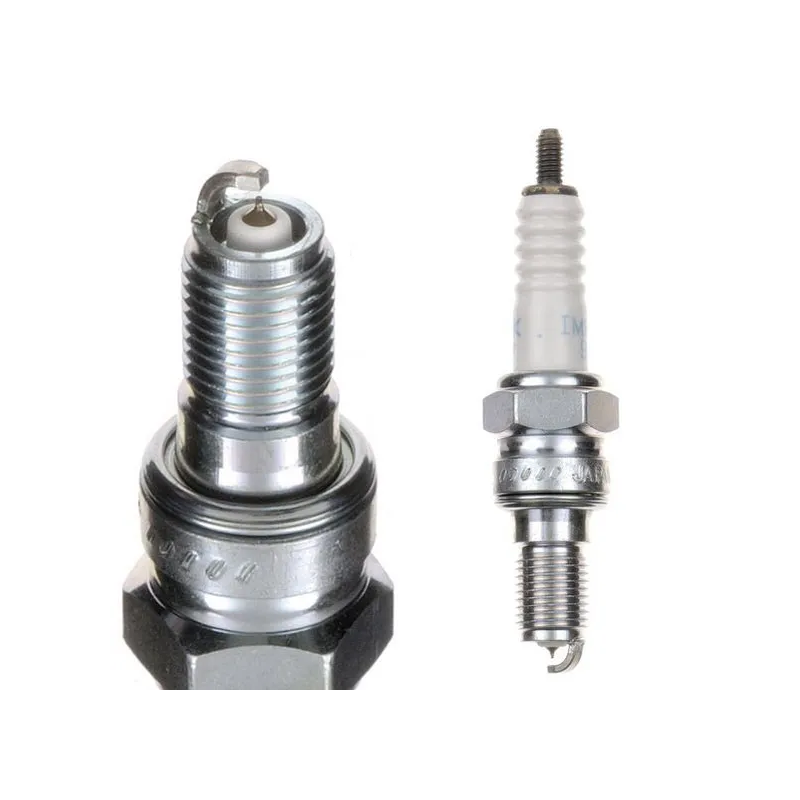
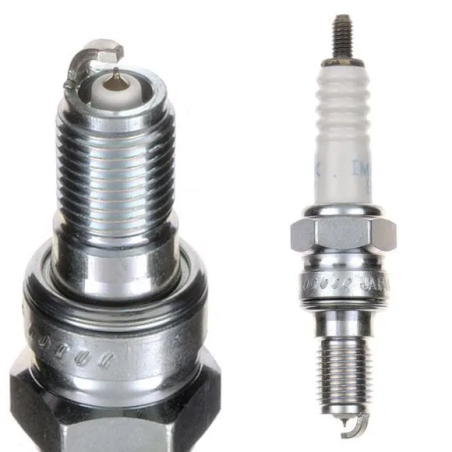
The gap (distance between the center and ground electrode) is factory-set but should always be checked according to the motorcycle or scooter specifications.
Some models use multiple ground electrodes for greater durability and reliability.
The printed code on the plug contains essential information:
Initial letters = thread diameter/type.
Central number = heat range.
Final letters/numbers = details such as resistance, thread length and construction type.
Always follow the vehicle manufacturer’s recommendations for code and specifications.
Check the gap before installation.
Replace plugs regularly to keep the engine efficient.
Highlight the benefits: affordability (copper), balanced performance (platinum), top efficiency and reliability (iridium).
Specific References
No questions yet. Be the first to ask!
No customer reviews for the moment.
NGK spark plugs for motorcycles and scooters: reliable, precise and available in standard, platinum and iridium versions for safe ignition, better performance and long-lasting durability.