








Stators for Motorcycles and Scooters

Stators for Motorcycles and Scooters: The Complete Guide to Your Vehicle's Electrical Heart
When it comes to motorcycle and scooter maintenance and spare parts, we often focus on more visible components like brakes, tires, or filters. However, there's a fundamental element that works silently inside the engine and is absolutely vital for the vehicle's operation: the stator. It's the true electrical energy generator of your motorcycle or scooter, without which you would literally be stranded on the roadside.
In this article, we'll delve into everything you need to know about stators (insert link to your products page here), explaining in detail what they are, how they work, which signals indicate a possible failure, and how to maintain them in perfect condition to ensure optimal performance for your two-wheeled vehicle.
What is a Stator and Where is it Located
The stator represents the fixed component of the motorcycle or scooter's alternator system. The term itself derives from the combination of the words "static" and "rotor," highlighting its immobile nature compared to the rotating part of the system.
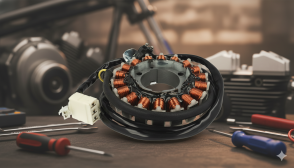
Physically, the stator consists of a set of copper wire coils wound in a circular configuration, positioned inside the engine crankcase. These coils are made of numerous very thin copper wires, gathered in a single cord and wound several times on themselves to form a ring. The structure is generally firmly fixed to the engine casing, in the lower part, on the opposite side from the variator.
Stators can have different configurations depending on the vehicle model: there are stators composed of 5, 6, 8, 12, or more poles, each designed to meet the specific electrical needs of the engine on which they are mounted.
What Does the Stator Do: Essential Functions
The primary function of the stator is to generate electrical energy from the mechanical energy produced by the engine. But how does this transformation occur? The mechanism is based on the principle of electromagnetic induction.
Inside the stator rotates the flywheel (or rotor), a magnetic component directly connected to the crankshaft. When the engine is running and the shaft turns, the flywheel rotates rapidly around the stator coils. The magnetic field of the flywheel, which has a positive charge on one side and negative on the other, generates a movement of electrons inside the copper coils of the stator: this produces alternating electrical current.
This alternating current is subsequently converted into direct current through a voltage regulator (or rectifier), making the energy usable for:
- Constantly recharging the battery while riding, preventing it from discharging
- Powering the ignition system and ensuring the spark at the spark plug
- Operating the lighting system (headlights, taillights, turn signals)
- Powering the dashboard and instruments
- Supporting all electronic systems present in modern motorcycles (ABS, engine control unit, fuel pump, injection system)
Without a perfectly functioning stator, the battery would quickly discharge and the vehicle would shut down, leaving you unable to restart. Essentially, the stator is what allows your motorcycle or scooter to be completely energy-autonomous while riding.
How a Stator Works Technically
To fully understand the importance of stators, it's useful to analyze their technical operation in more detail.
The electrical generation system essentially consists of three elements working in synergy:
- The stator (fixed part with coils)
- The rotor or flywheel (rotating magnet connected to the crankshaft)
- The voltage regulator (which converts and stabilizes the current)
When you start the engine and the crankshaft begins to turn, the magnetic flywheel rotates inside the stator. The rotation speed is directly proportional to engine RPM: the more you accelerate, the faster the flywheel spins and the greater the amount of current generated.
The rapid passage of the magnetic field through the copper coils creates a potential difference that pushes electrons to move, generating alternating current. This current, variable in intensity and polarity, is then sent to the voltage regulator which has the task of:
- Converting alternating current into direct current
- Stabilizing the voltage around 13.5-14.5 volts (standard values for battery charging)
- Protecting the system from damaging voltage spikes
It's important to emphasize that the stator generates energy only when the engine is running and in motion. When the vehicle is stationary with the engine off, it's the battery that provides the energy needed for ignition and any electrical utilities.
Average Stator Lifespan: How Long Can it Last
The lifespan of a stator depends on multiple factors related to both component quality and vehicle usage conditions. Under normal conditions, a good quality stator can last on average between 40,000 and 60,000 kilometers, although cases where it far exceeds these figures are not rare.
Some factors that influence the longevity of stators include:
- Build quality: stators made with premium materials, such as pure copper and high-quality insulators, tend to last much longer
- Usage conditions: predominantly urban use with frequent stop-and-go tends to stress the stator more than highway driving
- Cooling system maintenance: high operating temperatures can significantly reduce stator life
- Voltage regulator efficiency: a faulty regulator can make the stator work under continuous strain, accelerating wear
- Installation quality: errors during assembly can compromise component durability
It's essential to consider that lifespan depends not only on mileage but also on component age and actual operating hours. For this reason, even on vehicles with low mileage but many years of age, stator replacement may be necessary.
Failure Signs: How to Recognize a Faulty Stator
Learning to recognize the symptoms of a faulty or deteriorating stator is crucial for timely intervention and avoiding being stranded. Here are the most common signals indicating problems with stators:
Constantly Discharged Battery
If the battery frequently discharges despite regular use, it could be a signal that the stator isn't generating sufficient current to keep it charged. Even after traveling several kilometers, if the battery struggles to maintain charge, the problem likely lies in the generation system.
Starting Difficulties
A faulty stator can cause difficulty in starting the engine, especially after prolonged stops. The vehicle might crank slowly or not start at all, simulating symptoms of a completely dead battery even if it was recently replaced.
Dim or Flickering Lights
A clear indicator of stator problems is represented by headlights and lights that appear weaker than normal or that vary in intensity while riding. If you notice that light intensity changes based on engine RPM or that lights tend to dim at idle, the stator might not be generating sufficient energy.
Sudden Shutdowns While Riding
One of the most dramatic symptoms of a burned-out stator is sudden vehicle shutdown while riding. The motorcycle or scooter stops abruptly as if the battery were completely dead, without warning and without showing any signs of life. This happens when the stator windings burn out completely.
Excessive Overheating
If the stator or surrounding area reaches unusually high temperatures, it could be a symptom of internal malfunction. Prolonged overheating can irreparably damage the coils, leading to definitive failure.
Unstable or Fluctuating Voltage
Measuring voltage with a multimeter while the engine is running, values that fluctuate significantly or don't fall within the standard range (13.5-14.5V) can indicate problems with the stator or voltage regulator.
Abnormal Noises
Although less common, a worn stator can produce grinding noises or abnormal buzzing coming from the engine casing, audible especially at idle or during sudden accelerations.
Visual Signs of Damage
During a visual inspection, signs of corrosion, discoloration of windings, burned or damaged cables, oxidized or loose connectors may be evident. These are clear indicators that the stator needs immediate attention.
Why Does a Stator Burn Out: Main Causes
Understanding the causes that lead to stator failure is fundamental for prevention. Here are the main factors:
Overheating
Heat represents the number one enemy of stators. High engine operating temperatures, cooling system problems, or long rides in traffic at low RPM can cause heat buildup that deteriorates coil insulation, leading to internal short circuits.
Faulty Voltage Regulator
When the regulator/rectifier doesn't work properly, the stator may find itself working under continuous strain, generating excess current that isn't properly managed. This overload significantly accelerates wear and can cause coil overheating.
Natural Wear and Vibrations
Like any electrical component, the stator is also subject to progressive deterioration over time. Constant engine vibrations and continuous thermal cycles (heating and cooling) can progressively weaken welds, connections, and winding integrity.
Liquid Infiltration
Water, oil, or other liquids entering the engine crankcase can severely damage stator windings, causing short circuits or copper wire corrosion.
Incorrect Installations
Using low-quality or non-compliant spare parts along with installation errors (incorrect bolt tightening, accidental coil damage, incorrectly tensioned or bent wiring) can compromise operation and drastically reduce stator lifespan.
Electrical Overload
Adding unplanned electrical accessories (additional lights, heated grips, high-draw USB chargers) without verifying stator generation capacity can lead to system overload, causing premature deterioration.
How to Check Stator Operation
If you suspect a stator problem, you can perform some preliminary checks using a multimeter. Here's the basic procedure:
- Battery voltage measurement with engine off: should be approximately 12.5-12.8V
- Voltage measurement with engine running at idle: should rise to 13.5-14.5V
- Voltage measurement with engine revving: should remain stable or increase slightly, never decrease
- Winding resistance check: with engine off, measure resistance between stator wires (specific values vary by model)
- Insulation verification: check that there's no continuity between stator wires and engine ground
If measured values significantly deviate from standard ones, or if voltage decreases when you accelerate instead of increasing, it's very likely the stator is faulty and needs replacement.
Preventive Maintenance: How to Extend Stator Life
Adopting some simple maintenance practices can significantly extend the life of stators and prevent costly failures:
Periodic Checks
Perform regular checks of electrical system status, monitoring charging voltage and absence of anomalies. Early diagnosis can prevent major damage.
Crankcase Cleaning
Keep the area where the stator is housed clean. Accumulations of dirt, dust, and debris can interfere with heat dissipation and cause overheating.
Cooling System Verification
Ensure the engine cooling system works properly. An engine that constantly works at high temperatures drastically reduces stator life.
Voltage Regulator Check
Periodically verify proper voltage regulator operation, as its malfunction can overload the stator.
Avoid Electrical Overloads
Don't overload the electrical system with high-draw accessories without verifying stator generation capacity. If you install new electrical devices, ensure your stator can support the additional load.
Protection from Infiltration
Regularly check engine crankcase gaskets and replace them if necessary, to prevent water or other liquid infiltration that could damage the stator.
Use Quality Spare Parts
When replacement time comes, always choose certified quality stators, made with premium materials like pure copper and high-temperature resistant insulators. A cheap low-quality spare part could prove much more expensive in the long run.
Rewinding or Replacement: Which Option to Choose
When a stator fails, you have two main options: rewinding or complete replacement.
Rewinding consists of rebuilding damaged copper windings. It can be an economically advantageous solution, but requires specific technical skills and doesn't always guarantee performance comparable to a new component. It's advisable only if performed by specialized technicians and if damage is limited to windings.
Complete replacement with a new stator generally represents the safest and most reliable choice, especially considering the following advantages:
- Performance guaranteed as per original specifications
- Superior long-term reliability
- Manufacturer warranty
- No compromise on material quality
High-quality stators are distinguished by precise characteristics: superior weight thanks to greater copper quantities, more winding turns to maximize efficiency, internal structure carefully crafted in every detail, and exclusive use of premium materials like pure copper and high-performance insulators.
The Importance of Choosing Quality Stators
Choosing the right stator is not a negligible detail. A superior quality component offers concrete advantages:
- Stable and constant current: even under extreme usage conditions
- Maximum energy efficiency: thanks to an optimized winding system that reduces magnetic losses
- High-temperature resistance: high-quality insulating materials that better withstand thermal stress
- Greater durability: robust construction that resists vibrations and mechanical stress
- Guaranteed compatibility: perfect adherence to vehicle specifications
In our e-commerce, you'll find a wide range of stators compatible with the main motorcycle and scooter models on the market, all carefully selected to guarantee quality, reliability, and optimal performance.
Conclusions: The Stator, a Component Not to Underestimate
The stator represents one of the most important elements of the electrical system in motorcycles and scooters, while often remaining hidden and little considered until failure occurs. Understanding its operation, knowing how to recognize signs of possible malfunction, and adopting preventive maintenance practices can make the difference between a worry-free journey and a costly breakdown.
Investing in quality stators and paying attention to your vehicle's electrical system health is not just a matter of performance, but of safety and reliability. Proper maintenance and choosing certified spare parts will guarantee peace of mind and riding pleasure for thousands of kilometers.
On our website, you'll find a complete selection of stators for all major brands and models, with qualified technical assistance to help you choose the component most suitable for your needs. Don't wait until it's too late: regularly check your stator's condition and replace it at the first signs of deterioration to avoid sudden and costly failures.
Comments : 0