



Jul
31,
2026
Topcase or side panniers: the right choice depends on capacity, mounting system and the kind of riding you actually do. Here's how to judge ...


World's Fastest Online Shopping Destination
Jul
31,
2026
Topcase or side panniers: the right choice depends on capacity, mounting system and the kind of riding you actually do. Here's how to judge ...
Jul
17,
2026
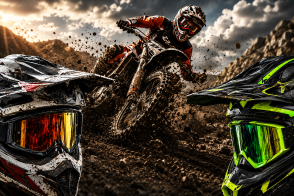
An enduro helmet isn't a motocross helmet or a street helmet: the difference lies in the removable visor, the approval standard and the ...
Jul
09,
2026
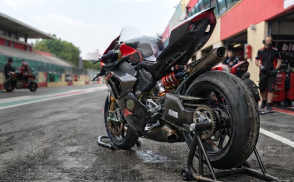
The stock shock is the first component manufacturers save money on. Here is what changes with a Bitubo, the differences between CLU, CZE, WMB and ...
Jul
07,
2026
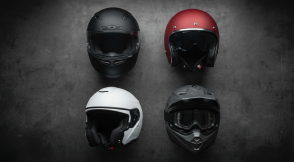
Full-face, jet, modular, crossover or enduro: every motorcycle helmet is designed for a specific use. Here's how to recognize the real differences ...
Jul
06,
2026
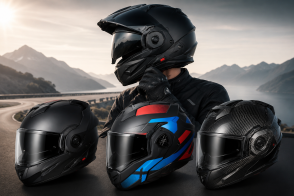
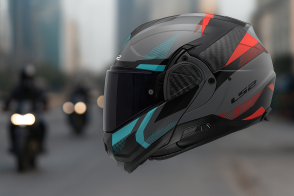
Convertible modular helmets with a flip-up chin guard at 180° combine the protection of a full-face helmet with the comfort of a jet helmet. Here ...
Oct
29,
2025
The Complete Guide to Your Electrical System's Guardian
Oct
29,
2025
The Complete Guide to Your Vehicle's Electrical Heart

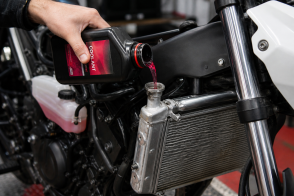
Coolant is one of the fundamental elements for the health of motorcycle and scooter engines. However, there is often confusion between blue liquid and red liquid, which can lead to serious errors.
Let's look simply but technically at what really changes, why they shouldn't be mixed, and when is the right time to replace them.
In a motorcycle engine, coolant has three main functions:
Without efficient coolant, the risk is damaging fundamental components such as the radiator, water pump, and cylinder head.
Blue (or green) liquid is the "older" technology, called IAT (Inorganic Additive Technology).
Main characteristics:
This type of fluid tends to degrade faster and requires frequent replacements
Red (or pink) liquid is more modern and uses OAT (Organic Additive Technology).
Main characteristics:
This type of fluid can last much longer than traditional blue ones, even several years of use
Many make the classic mistake here: "it's just liquid... what's the difference?"
In reality, it makes a big difference.
Mixing blue and red liquid is strongly discouraged because:
In some cases, it can even lead to the cooling system blocking. Simple rule to remember:
red with red, blue with blue — never mix
In the 2-wheeler sector:
The best advice is always the same:
check your motorcycle's manual or use the same type already present in the circuit.
Even if it seems "always the same," the liquid degrades over time.
General indications:
Over time, anticorrosion additives wear out and the liquid loses effectiveness
Watch out for these signs:
If you notice any of these → it's best to replace it immediately.
To avoid problems:
Coolant is not all the same:
the difference between blue and red is chemical and technical, not just aesthetic.
For modern motorcycles, it's advisable to opt for more advanced products, but the fundamental thing remains:
never mix different liquids and respect replacement intervals
This way you avoid serious problems... and keep your engine always in shape
Comments : 0