


Jul
31,
2026
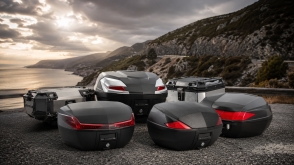
Topcase or side panniers: the right choice depends on capacity, mounting system and the kind of riding you actually do. Here's how to judge ...


World's Fastest Online Shopping Destination
Jul
31,
2026
Topcase or side panniers: the right choice depends on capacity, mounting system and the kind of riding you actually do. Here's how to judge ...
Jul
17,
2026
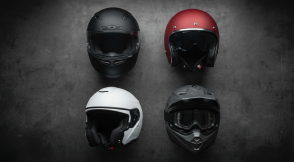
An enduro helmet isn't a motocross helmet or a street helmet: the difference lies in the removable visor, the approval standard and the ...
Jul
09,
2026
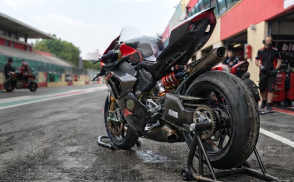
The stock shock is the first component manufacturers save money on. Here is what changes with a Bitubo, the differences between CLU, CZE, WMB and ...
Jul
07,
2026
Full-face, jet, modular, crossover or enduro: every motorcycle helmet is designed for a specific use. Here's how to recognize the real differences ...
Jul
06,
2026
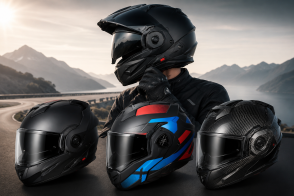
Convertible modular helmets with a flip-up chin guard at 180° combine the protection of a full-face helmet with the comfort of a jet helmet. Here ...
Oct
29,
2025
The Complete Guide to Your Electrical System's Guardian
Oct
29,
2025
The Complete Guide to Your Vehicle's Electrical Heart

The rear end pumping out of corners, the bike getting unsettled over bumps, bottoming out as soon as you add a passenger and luggage: it is almost never the bike's fault, almost always the stock shock's. It is the component manufacturers save the most on, because it has to work "well enough" for a 60 kg rider and a 110 kg one, for the commute and for the mountain pass. The result is that it truly suits nobody. A Bitubo shock is built on the opposite philosophy: model-specific settings and adjustments to match your weight and riding style. Here is what really changes, how to read the codes and — the part almost nobody explains — how to set it up once fitted.
Most original-equipment shocks are simple emulsion units: oil and gas share the same chamber and mix when the shock works hard. Emulsified oil damps less and less — that is the fade you feel after ten proper corners or half an hour of bumpy back roads: the rear goes "rubbery" and the bike floats. Bitubo road-series shocks are nitrogen-pressurised with a floating piston physically separating oil from gas: the oil cannot emulsify and the hydraulic response stays consistent under prolonged stress.
The differences do not end with the hydraulics. The end fittings are CNC-machined from solid aluminium alloy, the shafts have low-friction surface treatments, the guide bushings run on low-friction materials. And there is an economic aspect few consider when buying: a Bitubo is serviceable — it can be opened, resealed, refilled and re-valved — while most stock shocks are sealed: when they are done, they are scrap. On a bike you keep for years, a quality shock is a one-off purchase; the stock one is a consumable with an expiry date.
The road rear-shock codes identify the architecture and available adjustments. The WMB and WME families are twin-shock pairs for classic bikes, customs and café racers; the CZE family (with its XZE twin, running a 14 mm shaft where the CZE uses 16 mm) and the CLU are monoshocks for naked, sport-touring and big bikes. The chart makes the differences clearer than a thousand words:
| Adjustment | WMB | WME | CZE / XZE | CLU |
|---|---|---|---|---|
| Spring preload | Yes, continuous threaded ring | Yes, micrometric ring | Yes, millimetric ring | Yes, hydraulic (by hand or 14 mm hex key) |
| Rebound damping | No | Yes, continuous | Yes, 7 clicks | Yes |
| Compression damping | No | No | No | Yes |
| Adjustable length | No | No | Yes, 10 mm range | Depends on application |
| Remote reservoir | No | No | No | Yes, braided metal hose |
| Configuration | Pair | Pair | Mono | Mono |
If your bike runs twin shocks, the choice is between WMB and WME. The WMB is the serious entry point: pressurised gas and adjustable preload are plenty for touring and city use, and already a different planet from the stock units on classic bikes. The WME adds continuously adjustable hydraulic rebound: the right pick if you often ride two-up or loaded, or want a rear end that stays composed when the pace rises.
On monoshock bikes, the CZE/XZE family covers road and sport-touring use with three real adjustments: preload, 7-click rebound and — rare in this bracket — length adjustment over 10 mm, letting you raise or lower the rear to tune attitude and steering speed. The CLU is the step above: remote reservoir on a braided hose (more oil, more consistency as the shock heats up), hydraulic preload adjustable without tools or disassembly, and compression damping on top. It is the choice for fast riders, occasional track days or fully loaded touring on demanding roads.
Before any adjustment comes the spring choice. Standard settings target an average rider of roughly 75-80 kg with gear: if you are significantly lighter or heavier, or always ride two-up, say so when ordering, because a spring with the correct rate is the foundation every adjustment works on. No rebound click can fix a spring that is too soft and sinks, or too hard and never works.
Whatever version you choose, the sequence is always the same and starts with sag — how much the bike settles under weight. Measure in two steps: first the rear ride height with the wheel off the ground (pick a fixed reference, say from the axle to a point on the tail, and mark it), then the same measurement with you on board in riding position, gear on, feet on the pegs — you will need a helper. The difference is your sag: for road use it should sit around a third of the suspension travel. If the bike drops more, add preload; if it sits high, reduce it. Re-measure after every change: two or three iterations and you are there.
Only after sag do you touch rebound, starting from the factory setting in the Bitubo instruction sheet for your code — every shock ships with its own model-specific instructions, and they remain the reference. From there, correct one click at a time, testing on the road between changes, always on the same stretch. The symptoms are clear: too open and the rear pumps, re-extends too fast after compression and the bike floats through direction changes; too closed and the wheel cannot extend between bumps, the suspension packs down, the rear sinks progressively and the bike gets nervous over fast bumpy sections. A quick static test: push down firmly on the tail and release — it should rise smoothly and stop without oscillating a second time.
On the CLU the same method applies to compression damping, which governs how much the shock dives over holes, dips and under braking load transfer: too open and the rear bottoms on every flaw, too closed and the wheel "kicks" over sharp bumps instead of absorbing them. Again: one click at a time, from the instruction-sheet baseline.
A pressurised shock works well as long as it holds pressure and the oil is healthy. The signs it is time for a service are oil weeping on the shaft, the return of "pumping" that adjustments no longer cure, and clicker changes that no longer make a perceptible difference. That is the whole point of a Bitubo: it can be serviced back to new, and re-valved if your weight, use or taste has changed in the meantime.
Fitting the new shock without setting sag: you throw away half its value, because the factory setting does not know your weight. Turning every adjuster at once "to feel the difference": after three simultaneous changes you no longer know which one did what — one at a time, always. Copying your friend's setup on the same model: different weight, different riding, and his settings on your bike can be worse than the baseline. Finally, do not neglect the front: renew the rear while the fork is worn out and the imbalance is all you will feel — factor it into the overall plan.
In our catalogue you will find Bitubo XZE11 monoshocks with specific applications for the Yamaha MT-07 and XSR 700, Yamaha MT-09 and XSR 900, Honda Africa Twin 1000 and Yamaha FZ8. If your bike is not on the list, write to us with model and year: Bitubo applications cover most bikes on the road and we will point you to the exact code, version and spring included.


Comments : 0