


Jul
31,
2026
Topcase or side panniers: the right choice depends on capacity, mounting system and the kind of riding you actually do. Here's how to judge ...

World's Fastest Online Shopping Destination
Jul
31,
2026
Topcase or side panniers: the right choice depends on capacity, mounting system and the kind of riding you actually do. Here's how to judge ...
Jul
17,
2026
An enduro helmet isn't a motocross helmet or a street helmet: the difference lies in the removable visor, the approval standard and the ...
Jul
09,
2026
The stock shock is the first component manufacturers save money on. Here is what changes with a Bitubo, the differences between CLU, CZE, WMB and ...
Jul
07,
2026
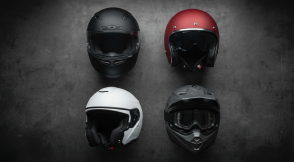
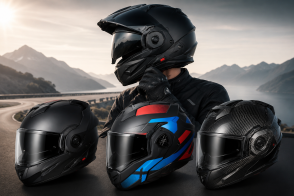
Full-face, jet, modular, crossover or enduro: every motorcycle helmet is designed for a specific use. Here's how to recognize the real differences ...
Jul
06,
2026
Convertible modular helmets with a flip-up chin guard at 180° combine the protection of a full-face helmet with the comfort of a jet helmet. Here ...
Oct
29,
2025
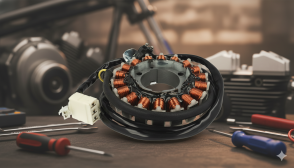
The Complete Guide to Your Electrical System's Guardian
Oct
29,
2025
The Complete Guide to Your Vehicle's Electrical Heart

Sooner or later the moment arrives: the helmet you've used for years has worn straps, flattened padding, or you simply changed motorcycle and need something different. You find yourself facing full-face, jet, modular, crossover and enduro helmets, all with the same approval on the label but designed for completely different uses. Choosing the wrong one isn't just a matter of comfort: it means carrying unnecessary noise on the highway, poor chin-jaw protection if you ride in the city every day, or a weight that tires your neck after two hours off-road.
In this guide we look at the real technical differences between the five families of motorcycle helmets, what changes with the ECE 22.06 approval and how to guide yourself based on the type of riding you actually do, not the one you'd like to do.
The full-face helmet remains the benchmark in terms of safety because the shell completely wraps the head, chin included, in a single rigid shell with no moving parts between the chin bar and the shell. In case of a fall with impact on the chin — one of the most affected areas in accidents — this structure offers the most predictable resistance, because there are no opening mechanisms that could fail or misalign.
It's the right choice if you ride on highways, main roads or track, or if you simply want maximum protection with no compromises. The downsides are poor ventilation in cheaper models in the city at low speed and the feeling of being "enclosed" for those not used to it: two aspects that mid-range models solve with adjustable air vents and removable interior padding.
Among the full-face models in the catalog you'll find several variants of the same shell, such as the LS2 FF820 Rapid III XTREM full-face helmet and the graphic version LS2 FF820 Rapid III Poppies I, both designed for daily road use with a good balance between weight and ventilation.
The jet helmet leaves the chin and face exposed, with or without an integrated visor. The advantage is evident: lightness, natural ventilation, ease of putting it on and taking it off, wide peripheral vision. It's the right helmet for urban scooters, short trips at moderate speed and for those who ride mainly downtown.
The downside must be stated bluntly: without a chin bar, protection of the chin-jaw area is nonexistent, and in case of a fall at sustained speed the risk of facial injuries increases compared to a full-face or modular helmet. This is why the jet helmet should be chosen knowing its limits, not as a "universal" helmet.
Some modern jet helmets recover part of the safety with more enveloping shells and wide screens, such as the LS2 OF603 Infinity II Carbon jet helmet, or focus on a more vintage style without giving up current approval, as in the case of the Momo Design FGTR Classic Flip, which also integrates an internal sun visor.
The modular helmet has a hinged chin bar that lifts up to essentially become a jet helmet. It's the solution for those who cover many kilometers and want to be able to open the helmet at stops without removing it, or for those who wear glasses and find it uncomfortable to put on a full-face helmet every time.
The compromise is real: the closing mechanism adds weight and, in approval tests, modular helmets must pass tests in both closed and open configuration, so not all models are certified to be used with the chin bar raised while riding. Before considering it a jet helmet on the go, always check the approval label of the specific model.
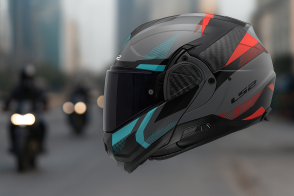
If you're considering a modular helmet, we've already explored on the blog how to recognize models with a 180° flip-up chin bar and what to check before purchasing. Among the models in the catalog you'll find the LS2 FF901 Advant X Nova and the fiber version LS2 Advant X Carbon, both with double full-face/jet approval.
The crossover helmet, often also called adventure or dual sport, is designed for those who ride on/off-road motorcycles or road maxi enduros with a 19-21 inch front wheel. It takes the pronounced chin and sun visor from the cross world, but mounts a wide clear visor typical of road helmets instead of goggles, plus ventilation designed for prolonged use on asphalt.
It's the right choice if you travel on gravel roads, light off-road trails and highway transfers with the same motorcycle, and you want a single helmet instead of carrying two different helmets around. Compared to a pure full-face helmet, it tends to be slightly noisier on the highway due to the shape of the shell and the peak, a detail to consider if you cover many kilometers on expressways.
A concrete example of this category is the LS2 MX702 Pioneer II family, available in several graphics and designed precisely for those who alternate between asphalt and off-road without changing helmets.
Different story for the "pure" cross or enduro helmet, the one without an integrated visor, designed to be paired with a separate goggle. Lightweight shell, chin bar protruding significantly forward to favor airflow at low speed (typical of off-road, where there's no relative wind from asphalt), removable peak in case of a fall to prevent it from levering on the neck.
It doesn't make sense to use it on the road: it lacks protection from weather elements and debris at sustained speed that a closed visor offers, and it's designed exclusively for use on track or off-road trails.
| Type | Protection | Comfort | Noise | Recommended Use |
|---|---|---|---|---|
| Full-Face | Maximum | Good, improves with ventilation | Low/medium | Road, highway, track |
| Jet | Limited (no chin bar) | Excellent, very lightweight | High above 90-100 km/h | City, scooter, short trips |
| Modular | High with chin bar closed | Excellent, versatile at stops | Medium | Touring, mixed daily use |
| Crossover/Adventure | High | Good, specific ventilation | Medium-high on highway | On/off, travel, gravel roads |
| Pure Cross/Enduro | High for off-road use, none on road | Excellent at low speed | Not relevant (no visor) | Off-road, off-road track |
The ECE 22.06 approval is the most recent European standard for motorcycle helmets and has gradually replaced the previous ECE 22.05, introducing stricter tests on more points of the shell and at different speeds and impact angles compared to the past. Among the main innovations are oblique impact tests, which better evaluate the helmet's behavior in non-perpendicular impacts, as well as extended checks on the visor and retention systems.
A point to keep in mind: helmets with ECE 22.05 approval don't automatically become dangerous or "illegal" overnight. They remain regularly usable according to national regulations, while 22.06 has progressively joined as the new standard for more recent approvals. If you're about to buy a new helmet, the simplest thing is to check the label sewn on the strap under the chin: it always shows the approval code and the approved model code.
The full-face has a single shell with no moving parts, while the modular has a hinged chin bar that lifts up. The full-face offers more predictable protection in case of an impact on the chin, the modular offers more comfort in daily use and at stops.
No. The jet doesn't cover the chin and jaw, so in case of a fall, facial protection is significantly lower compared to a full-face or a closed modular helmet. It should be chosen knowing this limit, typically for urban use at moderate speeds.
It depends on the model: only modular helmets also approved in the open configuration (essentially like a jet) can be used this way. The approval label of the specific helmet should always be checked before using it open while riding.
No, there's no obligation for immediate replacement. 22.05 helmets remain usable according to national rules; 22.06 mainly concerns new approvals for models placed on the market more recently.
The crossover has an integrated clear visor also designed for road use, while the pure enduro helmet has no visor and must be paired with a separate goggle, being designed only for off-road use.
Every type of helmet is designed to meet a specific need, and often the best choice depends more on the route you take every day than on the motorcycle you ride. If you want to compare models, materials and approval levels, take a look at the motorcycle helmets section of ML Moto: you'll find full-face, jet, modular and adventure helmets from various brands, with detailed technical sheets for each model.



Comments : 0