



Jul
31,
2026
Topcase or side panniers: the right choice depends on capacity, mounting system and the kind of riding you actually do. Here's how to judge ...


World's Fastest Online Shopping Destination
Jul
31,
2026
Topcase or side panniers: the right choice depends on capacity, mounting system and the kind of riding you actually do. Here's how to judge ...
Jul
17,
2026
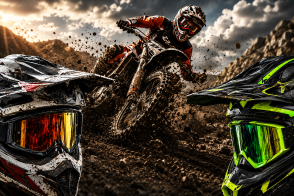
An enduro helmet isn't a motocross helmet or a street helmet: the difference lies in the removable visor, the approval standard and the ...
Jul
09,
2026
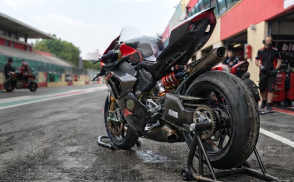
The stock shock is the first component manufacturers save money on. Here is what changes with a Bitubo, the differences between CLU, CZE, WMB and ...
Jul
07,
2026
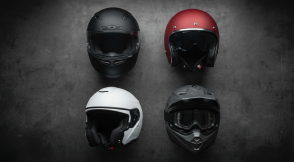
Full-face, jet, modular, crossover or enduro: every motorcycle helmet is designed for a specific use. Here's how to recognize the real differences ...
Jul
06,
2026
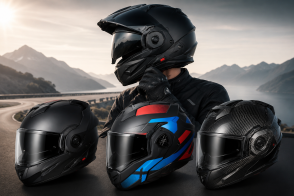
Convertible modular helmets with a flip-up chin guard at 180° combine the protection of a full-face helmet with the comfort of a jet helmet. Here ...
Oct
29,
2025
The Complete Guide to Your Electrical System's Guardian
Oct
29,
2025
The Complete Guide to Your Vehicle's Electrical Heart

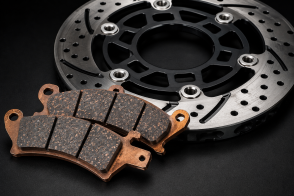
Choosing the right brake pads is not a question of budget — it is a question of safety. Here is everything you need to know, explained without unnecessary jargon.
There is a moment almost every motorcyclist knows: you are at the shop, or staring at a screen with dozens of different references, and you realise you have absolutely no idea which brake pad to buy. Organic, sintered, semi-metallic — it all sounds the same, yet the differences really do matter, especially when you are braking at 100 km/h.
This guide is designed to clear that doubt once and for all.
When you pull the brake lever, the hydraulic calliper pushes the pad against the disc. The friction generated converts kinetic energy into heat, slowing the wheel. It sounds simple — and the principle is — but the material the pad is made of completely changes how this process behaves: how much pressure is needed, the optimal working temperature, how much it wears the disc, whether it makes noise.
Organic pads — also called "non-asbestos organic" or NAO — are made from a mixture of fibres, resins and binding materials. The compound is soft and works best at relatively low temperatures.
Sintered pads are produced by compressing a mixture of metallic powders — copper, steel, graphite, bronze — under high pressure and temperature. The result is a dense material, heat-resistant and capable of maintaining performance under extreme conditions.
If your braking system produces a persistent squeal even with new pads, you may find our guide useful: why do motorcycle brakes squeal and how to fix it.
| Feature | Organic | Sintered |
|---|---|---|
| Optimal working temperature | Low–medium | Medium–high |
| Initial bite | High and progressive | More direct |
| Wet weather performance | Adequate | Good |
| Disc wear | Better | Slightly worse |
| Noise | Almost none | Squeal possible |
| Pad lifespan | Shorter | Longer |
| Indicative price | € | €€ |
Short braking events, low temperatures, city traffic. Progressive feel is an advantage. Honda SH, Yamaha XMAX, Kymco Xciting: a quality organic pad works well.
Mountain descents, long transfers, passenger on board. A sintered pad won't let you down after 30 km of downhill braking. Brembo SA/SP series.
Intense repeated braking, high temperatures. Organic pads fade after a few hard laps. Sintered only — racing compound where needed.
Wide but infrequent braking. Both types work fine; if you also do mountain weekends, favour sintered.
Brembo is the absolute benchmark for the European road market. The SA (Sinter Allround) and SP (Sinter Professional) lines cover the vast majority of motorcycles in circulation, with a clear coding system to find the right reference. In our catalogue you will find Brembo sintered brake pads for Honda, BMW, Yamaha, Kawasaki and many other brands — many at 40% off the list price.
Ferodo has motorsport roots and produces excellent pads for those seeking a sportier feel. EBC is highly regarded in the aftermarket segment with several lines (Organic, Sintered, Double-H) covering very different usage profiles.
Golden rule: never cut corners on unknown brands for brake pads. Brakes are the most important active safety system on your motorcycle — always invest in certified quality products.
→ Browse Brembo brake pads on MLMoto (up to -40%)
This is the question many riders postpone for too long. Here are the clear signals.
The friction material thickness drops below 2–3 mm. You can check this by looking through the calliper slots or measuring with calipers. If you can see mostly the metal backing plate, you are already overdue.
A deep metallic grinding noise during braking — different from the light squeal of sintered pads — means the backing plate is contacting the disc. Stop riding as soon as safely possible.
The lever requires more travel than usual, or braking is less decisive despite the calliper functioning correctly. The pad may have lost effectiveness through glazing or excessive wear.
Aggressive riders or those who do a lot of mountain riding can halve these figures comfortably.
New pads, new disc: never brake hard in the first 100–200 kilometres. The reason is technical: the pad's friction surface leaves the factory with a geometry not yet adapted to your specific disc. The first progressive braking events "abrade" the surface, creating the optimal contact between the two components.
Skipping bed-in — hard braking from the start — risks early glazing of the pad: the surface crystallises, performance drops, and the component is compromised well before its normal service life.
The procedure is simple: 5–6 progressive stops from 50–60 km/h in the first few days, then gradually increase intensity over the following weeks.
A common mistake is replacing pads without checking the condition of the discs. If the disc has deep grooves or is warped, even the best pad will not deliver expected performance — and it will wear unevenly.
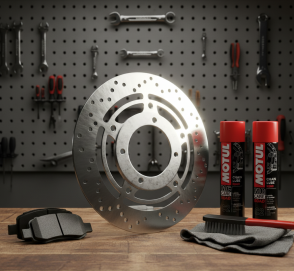
When you replace your pads, it is always the right moment to inspect your brake discs: residual thickness (compare with the minimum marked on the disc itself, often stamped on the edge), visual flatness, absence of cracks or grooves deeper than 0.5 mm. If the disc is at the limit, replace both together.
After every replacement — and at least every 5,000 km — it is advisable to clean the braking system with a dedicated brake cleaner. Graphite residue, metallic dust and road grime accumulate over time and can compromise friction and cause abnormal squealing.
Fundamental rule: never use WD-40 or oily products on braking surfaces — discs and the friction side of pads. Any lubricant reduces friction and creates extremely dangerous conditions. For calliper slide pins, use only high-temperature grease specifically designed for the purpose.
Have questions about your specific model? Contact us — we are based in Ventimiglia and know the parts for motorcycles circulating across Europe very well.
Comments : 0