


Jul
31,
2026
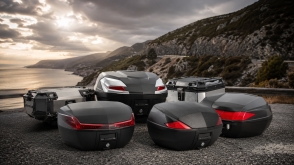
Topcase or side panniers: the right choice depends on capacity, mounting system and the kind of riding you actually do. Here's how to judge ...

World's Fastest Online Shopping Destination
Jul
31,
2026
Topcase or side panniers: the right choice depends on capacity, mounting system and the kind of riding you actually do. Here's how to judge ...
Jul
17,
2026
An enduro helmet isn't a motocross helmet or a street helmet: the difference lies in the removable visor, the approval standard and the ...
Jul
09,
2026
The stock shock is the first component manufacturers save money on. Here is what changes with a Bitubo, the differences between CLU, CZE, WMB and ...
Jul
07,
2026
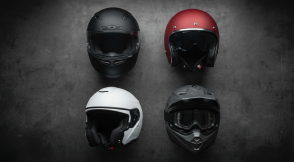
Full-face, jet, modular, crossover or enduro: every motorcycle helmet is designed for a specific use. Here's how to recognize the real differences ...
Jul
06,
2026
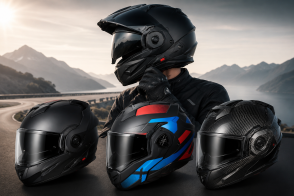
Convertible modular helmets with a flip-up chin guard at 180° combine the protection of a full-face helmet with the comfort of a jet helmet. Here ...
Oct
29,
2025
The Complete Guide to Your Electrical System's Guardian
Oct
29,
2025
The Complete Guide to Your Vehicle's Electrical Heart

A full-face road helmet isn't enough once you leave the tarmac behind. Riding enduro or motocross means dealing with different impact patterns, a standing riding position and hours of hard breathing that a street helmet simply isn't built for. Pick the wrong model and you'll end up with a visor that fogs up on technical sections, a chin bar that overheats in summer, or worse, inadequate protection in a crash.
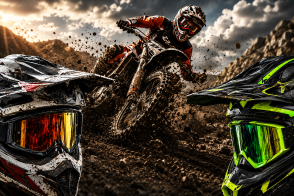
A pure motocross helmet is built for the track: an extended chin bar for grip on the handlebar during jumps, weight cut to the minimum, and no visor mount because it's meant to be worn with goggles only. Great on the start line, uncomfortable on the road or on long transfers.
An enduro helmet comes from the same mould but adds a removable visor, an adjustable peak for low sun, and usually a better-finished seal against noise. It's the right compromise if you switch between dirt and asphalt in the same ride.
An adventure (or 'touring enduro') helmet goes further: a less extreme chin bar, better acoustic insulation, sometimes even intercom mounts. Built for riders who cover long distances on road-oriented enduro bikes, where off-road is part of the trip rather than the whole point.
Ask yourself where you spend most of your riding time. If 90% of it is timed motocross sessions or track days, go for a pure motocross helmet with dedicated goggles. If you ride enduro with road sections in between, a visored enduro helmet is almost always the more practical choice. If you tour between gravel roads and asphalt, the adventure helmet stays the most versatile.
Since 2024 the older ECE 22.05 approval has been progressively phased out in favour of 22.06, which introduces additional tests: oblique impacts, multiple-speed impact testing and, crucially, specific checks for 'convertible' configurations or removable-visor setups. For an enduro helmet, which switches between a visored configuration and a goggles-only one, this detail isn't minor: make sure the approval actually covers both configurations, not just one.
Always check the label sewn into the chin strap: it states the approval standard and certification number. If it's missing or unreadable, that's not a helmet you should trust your safety to.
On enduro helmets the visor should be short with an adjustable angle: an oversized visor catches wind on jumps and fast sections, throwing your head off balance. If your riding is mostly motocross, consider removing it entirely and relying on goggles with a good foam seal, so dust doesn't get in during falls or sandy sections.
Ventilation is the other critical point: look for wide front intakes and internal channels that route air down to the mouth area, not just the forehead. When riding standing up, with the helmet more exposed to airflow than on the road, good rear extraction makes a huge difference on hot days.
An off-road helmet should be tried on with the balaclava you'll actually wear, not bare-headed: that changes the fit by a few millimetres, enough to make a helmet feel 'right' in the shop and 'loose' after an hour on the track. Measure your head circumference at its widest point, above the eyebrows, and compare it against the manufacturer's size chart: S/M/L sizing varies a lot between brands.
A correctly fitted enduro helmet should stay put when you shake your head sideways, without pressing on specific spots that become annoying after twenty minutes. If you feel pressure points already in the shop, it won't 'break in': it's the wrong size.
In our motorbike helmet section you'll find several models to compare in terms of protection, weight and ventilation systems. If you're also looking at accessories like goggles, intercoms or replacement visors, take a look at the motorcycle accessories section: sometimes it's a small detail, like the foam on your goggles or a spare peak, that makes the difference between a comfortable ride and one you'd rather forget.
Comments : 0