


Jul
31,
2026
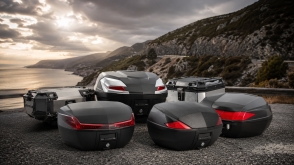
Topcase or side panniers: the right choice depends on capacity, mounting system and the kind of riding you actually do. Here's how to judge ...


World's Fastest Online Shopping Destination
Jul
31,
2026
Topcase or side panniers: the right choice depends on capacity, mounting system and the kind of riding you actually do. Here's how to judge ...
Jul
17,
2026
An enduro helmet isn't a motocross helmet or a street helmet: the difference lies in the removable visor, the approval standard and the ...
Jul
09,
2026
The stock shock is the first component manufacturers save money on. Here is what changes with a Bitubo, the differences between CLU, CZE, WMB and ...
Jul
07,
2026
Full-face, jet, modular, crossover or enduro: every motorcycle helmet is designed for a specific use. Here's how to recognize the real differences ...
Jul
06,
2026
Convertible modular helmets with a flip-up chin guard at 180° combine the protection of a full-face helmet with the comfort of a jet helmet. Here ...
Oct
29,
2025
The Complete Guide to Your Electrical System's Guardian
Oct
29,
2025
The Complete Guide to Your Vehicle's Electrical Heart

Ever come back from a ride with your helmet strapped to the topcase because nothing else fit inside? Or stopped three times to check the panniers were still locked on properly? The wrong luggage setup isn't just inconvenient: it wastes your time, forces compromises on what you can bring, and if the mounting system isn't right for your bike, it can even affect stability in corners or under braking.
Before picking a topcase or a pair of side panniers, it helps to be clear on three things: how much space you really need, what kind of mount your bike requires, and whether you prefer the rigidity of a hard case or the practicality of a soft bag.
The topcase, the rear box, is mainly built around the helmet: you get off the bike, slide it in, lock the case and walk away without carrying it. Side panniers, on the other hand, exist for actual touring load: clothes, tools, anything you don't want stacked on the passenger seat.
Riders who only cover city distances often settle for a 30-40 liter topcase and skip the panniers altogether. Touring riders or anyone covering long distances almost always end up fitting both, because the capacity of a single topcase isn't enough for a weekend away, let alone a week-long trip.
An average full-face helmet takes up about 28-30 liters, a modular helmet a bit more: if you want the topcase to fit it along with a jacket or gloves, aim for at least 32-35 liters. For a single helmet and nothing else, 28 liters is plenty.
For side panniers the math changes: 16-20 liters per side covers daily use and short weekends, while longer trips push you toward 30-36 liters per case. Watch out though: more capacity means more weight and more width, which becomes a real problem on narrow bikes or when filtering through traffic.
This is where the most common mistake hides. A topcase or panniers don't just sit on the bike: they lock onto a specific plate or rack, which in turn has to match the brand and model of the case. The most common systems are Monokey and Monolock: they aren't interchangeable, so if you already have a Monokey rack you can't fit a Monolock case on it without swapping the plate.
Even within the same brand, capacity changes the mounting plate: a 33-liter case doesn't use the same fitting as a 56-liter one, for instance. Before buying, always check the product's technical sheet and make sure it explicitly lists your bike model, not just the engine size.
Rear racks and side pannier frames are almost always bike-specific: the mounting points on the frame, the distance from the exhaust, and the clearance from the footpegs all change from model to model. Universal racks exist, but they usually mean a less rigid fit and more play while riding, which over time widens the mounting holes and leaves the case wobbling.
If you're not sure what fits your bike, the fastest way to avoid mistakes is to look for a complete luggage system already paired with the correct rack, so you're not checking compatibility piece by piece.
Hard cases, in ABS plastic or aluminum, protect contents better from impacts and rain, lock properly, and hold up even if someone accidentally sits on one at a red light. On the downside they weigh more, add more width, and if they're not painted to match the bike, the look isn't for everyone.
Soft bags are lighter, come off in seconds and fold flat when not in use, but offer less impact protection and less real security against tampering: most close with padlocks or straps, not proper locks. Many riders pick soft bags for daily city use, while for touring the rigidity of a hard case makes a real difference in a long downpour.
The most common one is buying the case before the rack, trusting a "universal" compatibility claim. The second is underestimating fully loaded weight: a full 36-liter case can weigh several kilos, and if the rack isn't rated for that load it will warp over time. The third is ignoring waterproofing: not every hard case is fully sealed, some are only splash-resistant, and you'll notice the difference the first time you ride through a real storm.
If you're weighing up a complete system, take a look at the accessories available in the motorcycle accessories section of the shop, where luggage, racks and mounting plates are grouped together to make comparing options easier.

Comments : 0